It was a Friday night some four years ago, that I could see Michelle was frustrated. “The kids don’t sit and converse at the table,” she said. “Ray is already twelve, Kacey nine, and by now they should be able to sit at the table and join conversations with adult guests that we have over, or even with us.”
I thought about it for a moment. “What exactly do you mean? They can hold a conversation just fine, if the topic interests them.”
She nodded, but her expression told me that I had not convinced her. “I’m talking about Friday night, when we’re all around the table for a nice Shabbat meal. The kids come to the table, eat each course, and then excuse themselves. We don’t have a real discussion around the table.”
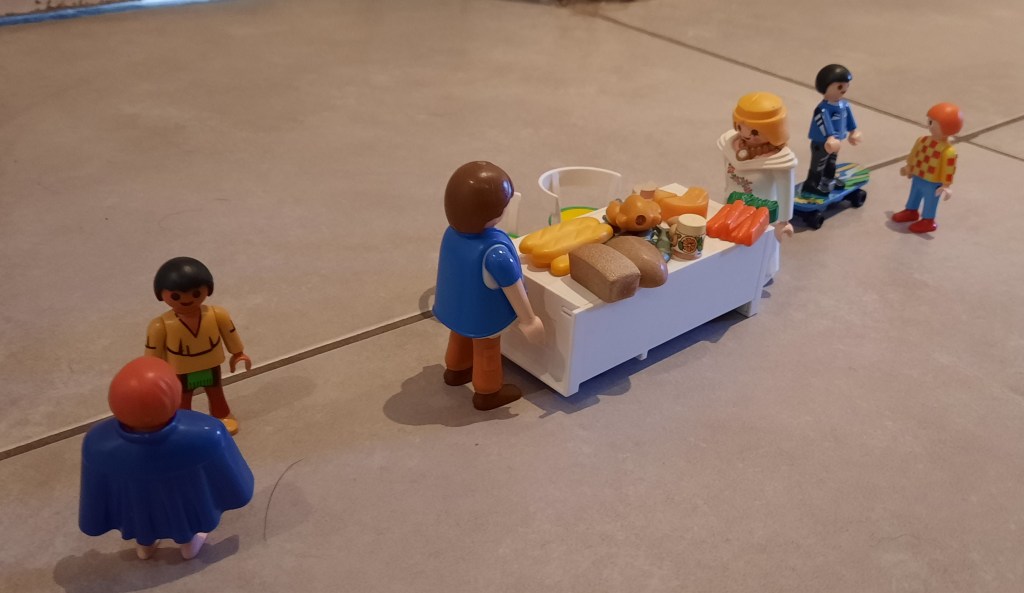
I thought about it for a bit more than a moment, trying to figure out if I agreed with the expectation. See, Michelle and I come from different backgrounds. When I was growing up, we came and left the table relatively freely, while in her house you were expected to stay at the table from start to end, unless you explicitly got permission to leave. When we married, and as our kids grew older, we adopted a hybrid model – you could leave the table, but you had to ask the hostess permission before you did.
Our kids were abiding by these rules, but they would request to leave the moment their plates were clean. As a result, the dinner table was not very… lively.
“So, what do you propose?” I asked.
“I want them to stay at the table more,” she said, “kids their age should do that”.
Internally, I shuddered. I could imagine meals spent forcing the kids to stay at the table just for the sake of propriety, arguing about when they could leave. I had told Michelle many times in the past that “I’m sure our kids will need to see a therapist one day. We cannot prevent that. All we can do is control what they complain about in their therapy sessions.” I really didn’t want family dinners to be one of those topics.
However, my wife has good instincts on what the end result should be for well-educated kids. So for me, it was no longer a question of “If”. It was a question of “How”.
The How
It was clear to me that whatever the solution, it would have to be engaging to the kids. It’s not enough to say “stay at the table because that’s how kids your age should behave” – I needed to find something that would make staying interesting to them.
The first idea that came to mind was simple, and one that we had seen other families do, and other bloggers post about. They usually go something like “Ask your kids about their week”, “Have each person say what they are thankful about”, etc. These ideas seemed nice, and clearly could involve every child, whatever the age. However, to me they seemed like they missed something. They were too generic, and I expected them to become boring over time. Also, some kids are less interested in talking about themselves directly, and might start to resent the need to share their feelings with everyone around.
In other words – the idea was a good one, but it needed a twist. Something to make it more appealing and with less reason to resist.
And so, the “Weekly Question” was born. Every family meal, I would come up with a new and wacky question (the wackier the better!). We’ve been doing this for years, so I really cannot tell you which ones we did and which I’m just thinking about now, but here are some examples that could easily find their way to our dinner table (more examples can be found here):
- What single type of food would you outlaw?
- If you could add a single subject to your school studies, what would it be?
- If you were a Martian, what flavor jellybean would be your favorite?
- If you were a superhero, what would be your strength? what would be your weakness?
- If you could act in any movie you know, in any part – what would it be?
The question would be asked, and we would make the rounds answering the question, each in his or her own turn. It was an instant success. Considering how totally-out-there the questions tended to be, people would bring their own creativity to the answers, and conversations would start surrounding the answers. Some meals, the entire discussion around the table could be traced back to the spark lit by the weekly question. A few weeks after we started the ceremony, it was the kids who would demand the weekly question be asked, even before I would announce it.
There were a few “house rules” that we adopted as well. The most important one was: you don’t have to answer, but you have to stay and hear everyone’s answers before leaving the table. Another one was that the person who asks the question answers last. The first rule makes sure that everyone participates, if only as active listeners. The second one… well, that just gave me more time to think of a fun answer 😉
[As a side note, I guess I should state explicitly that no phones were allowed at the table. Since this usually happens during the Jewish Sabbath, when our phones are anyway off limits, this was not an issue for us. But it’s worth pointing out the obvious here: phones are real conversation killers.]
The solution was great also because of what I always like about such systems: it required very little “parenting overhead”. The questions were fun, so it didn’t feel “heavy”. If the question was boring, the conversation died out quickly, and people could once more leave the table. But mostly they grabbed the interest of the participants, and so it matched the famous “80-20 rule”: with 20% of the effort, we got 80% of the value we were after – a family engaged in conversation over the dinner table.
Unexpected Benefits
It didn’t stop at making our meals more lively and engaging, I’m happy to tell you. The ceremony had lots of positive side-effects. First, as time went on my kids began to want to be the ones to ask the questions. We’d have some meals with six questions asked, and the whole meal just surrounding questions asked by kids of all ages, as well as adults.
Second, it helped break the ice when friends and relatives came over. Nothing like a strange question about a fantastic topic to get to know new members of your community or a relative visiting from overseas. It’s risk-free, and light, and fun, and even if you don’t feel like answering you’re still part of the experience.
But most importantly, we found that it allowed the kids to share difficult stuff they were going through at times. Michelle remembers we once asked “Who would you put on a spaceship going to be an ambassador to an alien planet?” Abby then answered, “I’d put my classmate Sarah. That way I will never have to see her ever again.” In the conversation that followed, we discovered this Sarah kid was picking on Abby in a nasty way. Abby was just keeping it in, and if not for that Weekly Question, it might have only been days or weeks later that we would have found out.
So, give it a try?
So, what do you think? I hope you like the idea, and try it out. If you do – please let me know in the comments. And if you need ideas for questions, I am happy to provide you with this list – I’ll try to add to it from time to time 🙂
 GoodEnoughParenting
sounds like a lovely idea, will definitely try it in our Friday dinner..
p.s
while i would probably pick my own questions I’d like a list of questions for inspiration if it’s not too much work
LikeLike
Sure thing – stay tuned…
LikeLike
So, I added a link to a page with a list at the end of the post – enjoy! I’ll try and add more there over time.
LikeLike
tried it with our young boys with the store question. my 5 year old wanted to open a free ice cream store, my eldest (8 year’s old and with high functioning ASD) initially got nervous and didn’t want to participate, but than said toys store. and than when we ask him what toys will be in his stire elobrated and gave a very extensive list of his inventory… it went great – thank you. we will be adding this tradition to our family dinners 🙂
LikeLike
So glad to hear you enjoyed it! I’ll continue to update the list of questions over time, so check there for updates every so often.
LikeLike
this week my 8 year old asked me before Friday dinner about the question (I said I wanted to start a new tradition the week before, and his memory is very sharp) I concurred that I will ask the question after we start, he seemed excited. when I asked the question he wanted to answer first this time, I asked about which superpower would they choose, he seemed despointed, and asked to ask about the store again. I told him it will be a different question each week, and maybe it will be easier for him to listen to others answers so he will have more time to think. eventually he combined the answer he wanted to give about a vinyl record store in to the ability to create vinyl records. after hearing other answers he added the ability to shoot fireballs.
this experience is proving both challenging and fun for him. again thank you for this blog.
LikeLike
This is amazing, Joe. It’s comments like yours that make sharing our experiences so worthwhile.
I’m working on a post to share a bit about our journey with our eldest, who also has ASD. Hope to post it this week. But for him as well this question has helped as a framework for working through flexibility, variety etc., which can be challenging.
LikeLike
it became a new tradition in our family Friday dinners, thanks.
I used a few questions from your list, but also invented a few so i thought I’ll share my questions as well:
If you could invent a new desert/candy what would it be?
witch character from a TV show/movie (could work with book depending in the age of the participants) would you most like to be friends with if you could? and what would you do together?
LikeLike